Cinnamon Roll Bread (Pull-Apart Loaf)
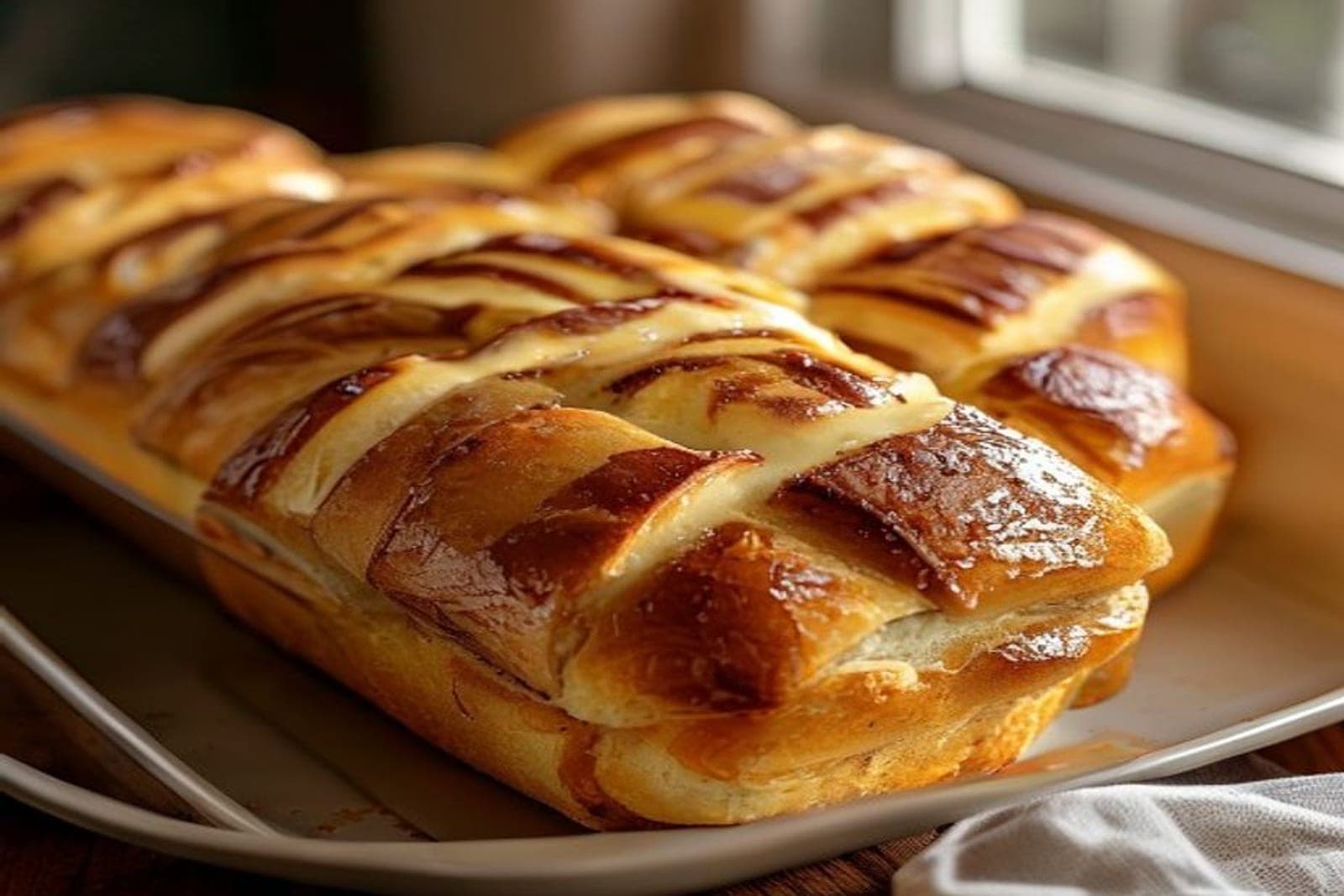
An accordion-stacked cinnamon roll bread loaf — cinnamon-sugar dough squares baked on their sides so it fans open into buttery pull-apart layers.
- Total time
- 3 hr 8 min
- Bake
- 38 min
- Yield
- 10 slices
- Level
- intermediate
The quick answer
Cinnamon roll bread is a pull-apart loaf: spread enriched dough with cinnamon-sugar butter, cut it into squares, then stack the squares on their edges down a 9x5-inch loaf pan so they fan out. Bake at 350°F until the center reads 190°F (about 35-40 minutes), then glaze. Unlike monkey bread, it peels apart in flat layers instead of torn balls.
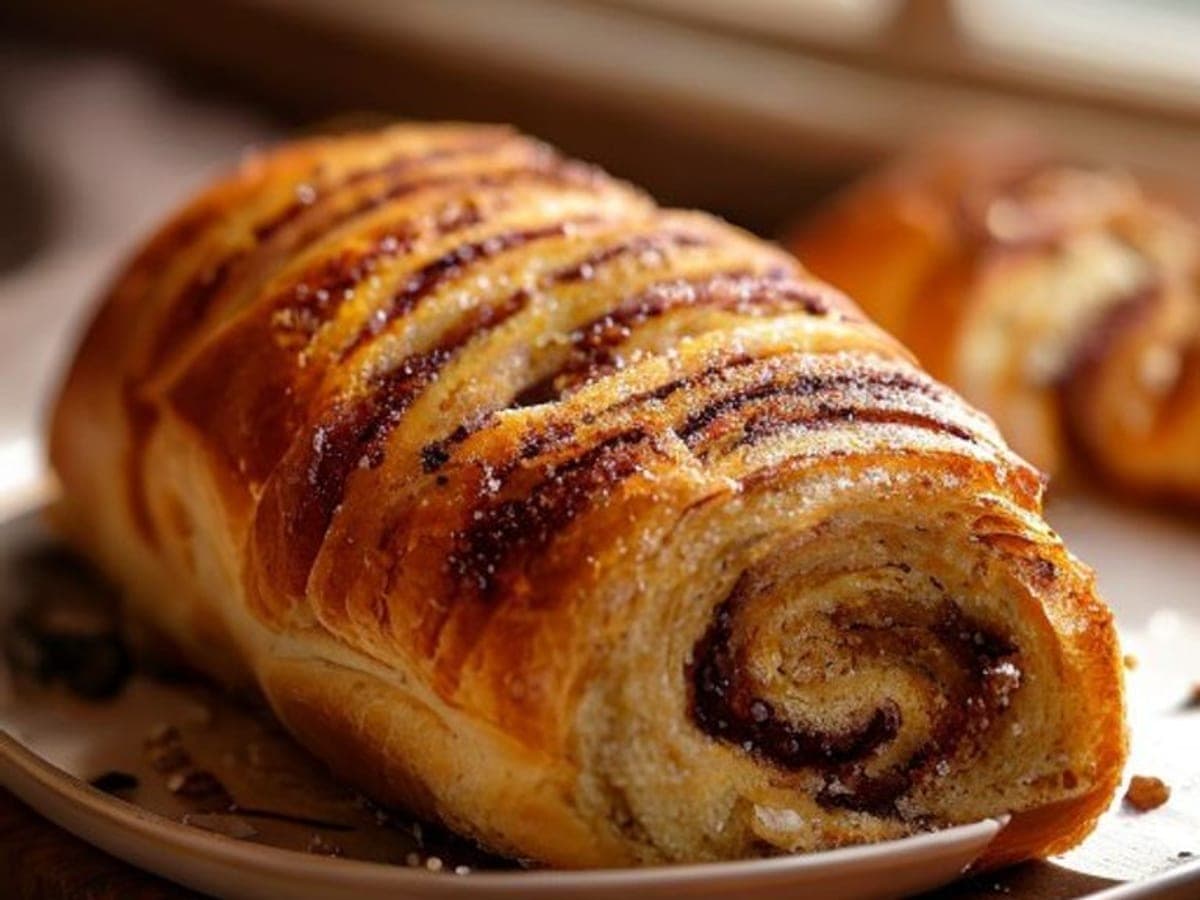
This is a cinnamon roll turned inside out and stood on its edge. Instead of coiling the dough into a spiral, you spread it with cinnamon-sugar butter, cut it into squares, and stack those squares like a deck of cards on their sides down the length of a loaf pan. As it bakes, the layers fan out and set into a tall, craggy loaf that pulls apart in sheets rather than tearing into balls the way monkey bread does. Every layer has its own cinnamon swirl, so there's no such thing as a bad slice — the ends are shatteringly crisp, the center is soft and steamy, and the whole thing gets a slick of glaze. It's a genuine showpiece that comes out of one ordinary loaf pan.
Ingredients
Dough
- ¾ cupwarm whole milk (about 110°F) — warm, not hot
- 2¼ tspinstant yeast — one packet
- 3 tbspgranulated sugar
- 4 tbspunsalted butter, melted — cooled slightly
- 1 egglarge egg — room temperature
- 3 cupsall-purpose flour — plus more to dust
- ¾ tspfine salt
Filling
- 6 tbspunsalted butter, very soft
- ¾ cuppacked brown sugar
- 1½ tbspground cinnamon
- ¼ tspfine salt
Glaze
- 1 cuppowdered sugar
- 2 tbspmilk — plus more to thin
- ½ tspvanilla extract
- pinch of salt
Instructions
Whisk the warm milk, yeast, and a teaspoon of the sugar together and let it sit until foamy.
Surface looks foamy and smells yeasty.
Stir in the remaining sugar, melted butter, and egg. Add the flour and salt and mix to a shaggy dough, then knead until smooth and elastic.
Dough is smooth, tacky but not sticky, and springs back when poked.
Cover and let rise in a warm spot until doubled.
Dough has doubled and holds a dent when pressed.
Butter a 9x5-inch loaf pan and line it with a parchment sling up the long sides. Mash the soft filling butter with the brown sugar, cinnamon, and salt into a spreadable paste.
Punch down the dough and roll it on a lightly floured surface into a 20x12-inch rectangle, about 1/4 inch thick. Spread the cinnamon-sugar paste all the way to the edges with an offset spatula.
Using a sharp knife or pizza wheel, cut the dough lengthwise into 5 long strips, then cut across to make squares roughly 4 inches on a side. Don't separate them — you're just scoring the stack.
You have about 15-20 filled squares in a grid.
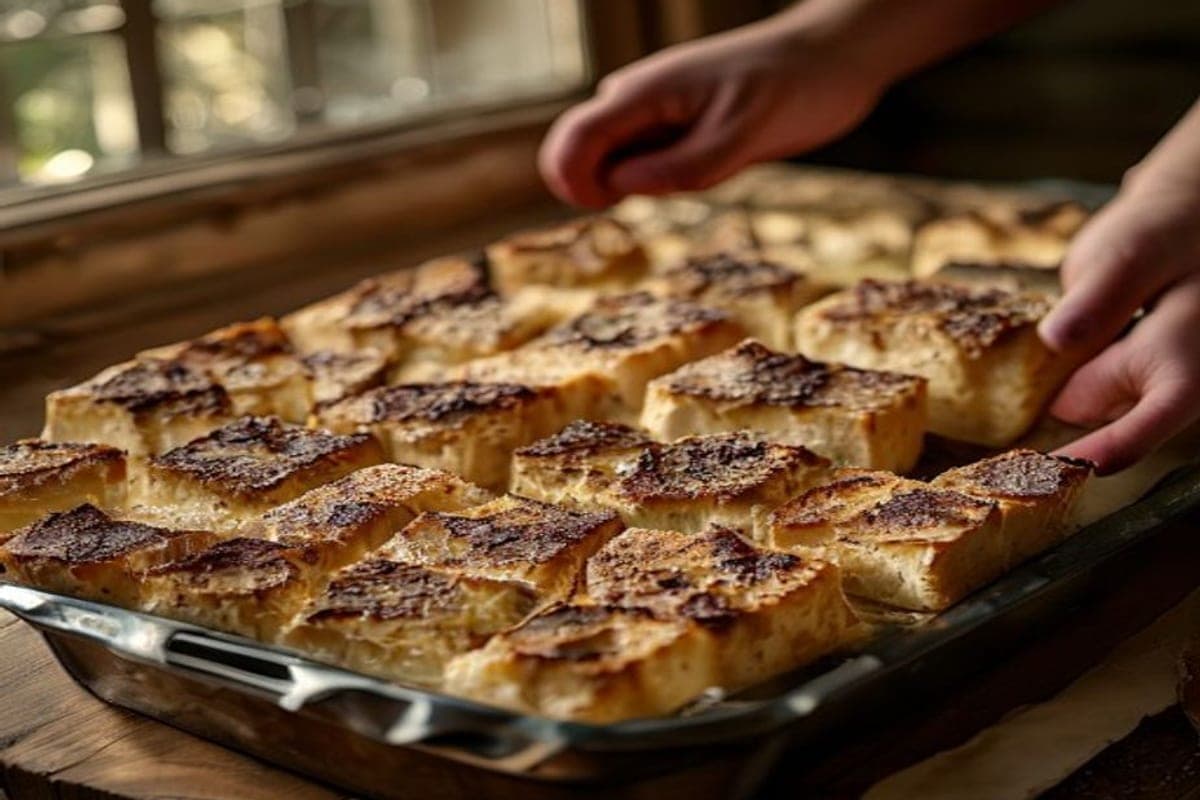
Stack the squares into short piles of 4-5, filling-side facing the same way, then stand each pile ON ITS EDGE in the loaf pan so the layers face out like the pages of a book. Line the piles up down the length of the pan until it's snugly filled. Don't pack too tightly — leave room to fan.
Squares stand upright in an accordion; cinnamon swirls face the ends of the pan.
Cover loosely and let the loaf proof until puffy and the squares have relaxed into each other.
Layers look pillowy and have grown to fill the pan.
Bake at 350°F until deep golden and the center of the loaf reads 190°F on a thermometer. Tent loosely with foil if the tops brown before the middle sets.
Top is deep golden, center reads 190°F / 88°C, and no wet dough shows between layers.
Cool in the pan 10 minutes, then lift out by the sling onto a rack. Whisk the glaze until pourable and drizzle it over the warm loaf so it runs into the layers.
Glaze soaks into the seams and sets to a thin sheen.
Make ahead, store & reheat
- Make ahead
- Assemble the loaf fully in the pan, cover tightly, and refrigerate overnight. In the morning let it sit at room temperature for 45-60 minutes until puffy, then bake as directed (add a few minutes from cold).
- Storage
- Store covered at room temperature up to 2 days, or refrigerate up to 5 days. Because the layers trap steam, keep the loaf well wrapped so the cut edges don't dry out.
- Reheating
- Warm the whole loaf covered in a 300°F oven for about 12 minutes, or microwave individual pulled-apart pieces 15-20 seconds until soft.
- Freezing
- Freeze the baked, unglazed loaf tightly wrapped up to 2 months. Thaw at room temperature, warm through, then glaze.
Substitutions
- Active dry yeast (bloom it in the warm milk first) instead of instant yeast
- Whole milk + 1 tbsp lemon juice, or buttermilk instead of warm whole milk
- Cream cheese frosting instead of vanilla glaze instead of glaze
Troubleshooting
- The stacked layers toppled over before baking
- The dough was too slack or the piles too tall. Chill the assembled loaf 15 minutes to firm the butter, keep piles to 4-5 squares, and let the squares lean on each other and the pan walls for support rather than standing free.
- The center is gummy while the edges are done
- The dense middle needs more time and a lower, steadier heat. Bake to 190°F internal, not by color alone, and tent the top with foil so the exposed edges don't force you to pull it early.
- Uneven browning — dark ends, pale middle
- Loaf pans concentrate heat at the metal ends. Rotate the pan halfway through, tent the dark end with a scrap of foil, and set the pan on a light-colored baking sheet to buffer the bottom.
- The loaf didn't pull apart cleanly
- The squares were packed too tightly to fan, or filling was skimped between layers. Leave a little slack when you load the pan and spread the cinnamon paste all the way to each edge so every seam has a butter line to separate on.
Tools I reach for
As an Amazon Associate, CinnamonRollsRecipe.com earns from qualifying purchases. Read our full affiliate disclosure.
Frequently asked questions
- What is cinnamon roll bread?
- It's a pull-apart loaf made from cinnamon roll dough. You spread the dough with cinnamon-sugar butter, cut it into squares, and stack them on their edges in a loaf pan so the baked loaf fans open into buttery layers, each with its own cinnamon swirl.
- How is cinnamon roll bread different from monkey bread?
- Monkey bread is torn or cut into balls that are tossed in cinnamon sugar and piled into a bundt pan, so it pulls apart into rounded chunks. Cinnamon roll bread stacks flat squares on edge in a loaf pan, so it peels apart in neat sheets or layers instead.
- How do I know when the loaf is done?
- Because it's tall and dense, go by internal temperature: the center of the loaf should read 190°F (88°C). The top should be deep golden and no wet dough should show when you gently separate two layers.
- Can I make cinnamon roll bread ahead of time?
- Yes. Assemble the loaf in the pan, cover tightly, and refrigerate overnight. Let it come to room temperature and puff for 45-60 minutes in the morning, then bake as directed, adding a few extra minutes because it starts cold.
Nutrition (estimate): 1 slice (of 10) · ~340 kcal. Nutrition is an automated estimate and will vary with brands and exact quantities.
Food safety: don't taste dough containing raw flour or raw egg. Refrigerate anything with cream cheese frosting, and reheat leftovers until piping hot.
Frostings & glazes to pair
Helpful guides
- The Best Cinnamon Roll Filling (Ratio + How to Apply It)The ideal butter, brown sugar, and cinnamon ratio for cinnamon roll filling, plus exactly how to spread it so you get a gooey, well-defined swirl that does not leak.
- How to Roll Even Cinnamon Roll SpiralsThe technique for rolling tight, even cinnamon roll spirals — how to shape the log, keep it uniform, and cut clean rolls that hold their swirl.
- How to Store & Freeze Cinnamon RollsHow to keep cinnamon rolls fresh at room temperature, in the fridge, and in the freezer — including baked and unbaked rolls.
More cinnamon rolls to try
- Cinnamon Roll Monkey BreadCinnamon rolls cut into pieces, tossed in cinnamon sugar, and baked in a bundt pan into sticky, pull-apart monkey bread with a caramel glaze.
- Classic Homemade Cinnamon RollsSoft, fluffy, bakery-style cinnamon rolls from scratch with a gooey brown-sugar filling and cream cheese frosting.
- How to Upgrade Canned Cinnamon RollsTurn a tube of store-bought cinnamon rolls into something bakery-worthy with the heavy cream trick, extra filling, and real cream cheese frosting.